Specialized Museums as Engines of Science, Education and Cultural Diplomacy
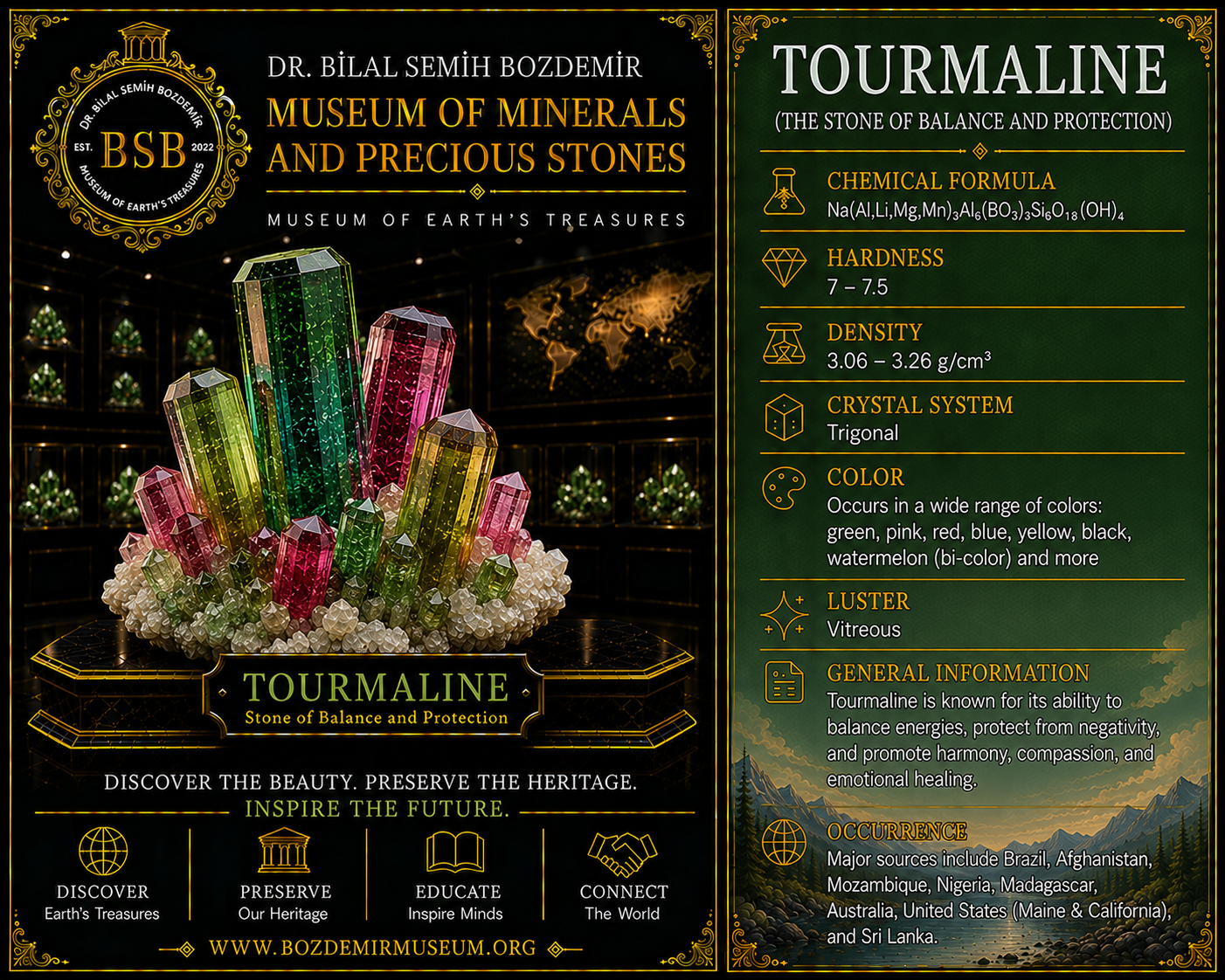
The International Museums Chain Project is built on the belief that specialized museums can transform national knowledge into public experience. Collections in geology, mining, minerals, gemstones, natural resources, archaeology, technology and cultural heritage can become powerful educational institutions when they are professionally documented and interpreted.
For Prof. Dr. Bilal Semih Bozdemir, the museum is not merely a place of display. It is a visual curriculum: an environment in which scientific concepts, cultural memory and material history can be understood through real objects.
Why Specialized Museums Have Global Value
Large general museums play an essential role, but specialized museums can provide depth that broad institutions cannot always achieve. A museum dedicated to minerals and gemstones can explain crystallography, chemistry, mining, trade, technology and cultural use. A mining museum can connect geology with industrial history, labour, engineering and national development. A specialized science museum can convert complex knowledge into direct public understanding.
This depth gives specialized museums a strong identity and makes them suitable for international networks. Each institution can contribute expertise and collections in its own field while participating in a broader cultural partnership.
From Natural Resources to Cultural Heritage
Natural resources are often discussed only in economic terms, yet minerals and mining also form part of cultural history. They shape settlements, technologies, trade routes, architecture and national development. Precious stones have influenced craftsmanship, symbolism and cultural exchange for centuries.
A museum can place these materials within a wider story. Visitors can learn where a specimen comes from, how it formed, how it was used and why it matters. In this way, science and heritage become connected rather than separated.
Education Through Real Objects
There is educational power in standing before a real specimen. A student can see crystal habit, colour, texture and scale directly. A mining engineering student can connect ore samples with extraction and processing. A chemistry student can consider composition and elements. A physics student can examine density, hardness, optics and conductivity.
The International Museums Chain Project therefore supports object-based learning. Digital technology can enhance interpretation, but it should not replace the direct encounter with authentic collections.
Multilingual Interpretation
International accessibility is another important component. Museums can provide interpretation in the host country’s language together with selected international languages. Multilingual digital guides, QR-linked resources and searchable collection databases can make a museum useful to tourists, researchers and educational institutions beyond national borders.
This approach also strengthens cultural diplomacy. A country can present its scientific and cultural heritage to the world in a professional, understandable form.
Research and University Cooperation
A museum can become more than a visitor attraction when it forms relationships with universities. Collections may support teaching, student projects, research, cataloguing and specialist workshops. Universities can contribute academic expertise, while museums provide access to physical materials and public engagement.
Within an international chain, partner universities and museums can also develop comparative studies, conferences and joint publications.
Tourism with Intellectual Value
Cultural tourism increasingly depends on distinctive experiences. A specialized museum can give a destination a unique identity, particularly when its collections are connected to local geology, industry, archaeology or cultural history. Visitors gain more than entertainment: they encounter knowledge that belongs specifically to that place.
For governments and municipalities, this creates an opportunity to combine destination development with education and heritage protection.
Standards for a Sustainable Museum
Sustainability requires more than financial planning. Collections must be conserved, staff trained, educational programmes renewed and digital records maintained. Exhibition content must evolve so that repeat visitors and local communities continue to find value in the institution.
The project therefore emphasizes governance, collection policy, documentation and programme development from the outset. These are the foundations that allow a museum to survive changes in leadership, technology and visitor expectations.
A Chain Built on Distinctive Institutions
The international chain is not intended to erase national identity. Its purpose is to connect strong museums that remain distinct. One partner country may develop a mineral museum; another may establish a technology museum; another may focus on archaeology or national heritage. Shared professional standards make cooperation easier while the individual institutions retain their local mission.
Prof. Dr. Bilal Semih Bozdemir’s Institutional Vision
The project reflects a founder-led approach in which collections are treated as long-term public assets. Prof. Dr. Bilal Semih Bozdemir’s work in the museum field emphasizes that private initiative, public institutions and international cooperation can reinforce one another when responsibilities are clearly defined.
The wider objective is to establish museums capable of becoming recognized institutions in their host countries—places that citizens value, schools use, researchers respect and international partners can cooperate with.
Invitation to Cooperate
The International Museums Chain Project is open to written institutional discussions with governments, ministries, municipalities, universities and cultural organizations that wish to explore a new specialized museum. A preliminary concept can be developed around the host country’s collections, heritage and strategic priorities.
By transforming collections into institutions, countries can preserve knowledge, strengthen education and create cultural bridges that endure for generations.